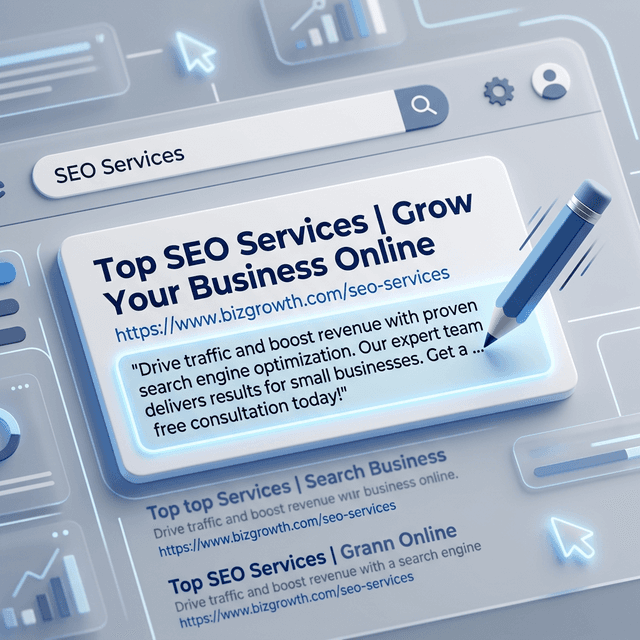

A meta description generator should make it easier to write a sharper search snippet, not just produce filler faster. The goal is not to crank out text. The goal is to give a page a cleaner, more compelling reason to earn the click.
That matters because weak descriptions usually fail in the same way. They sound generic, they promise too much, or they say nothing concrete at all. A stronger structure fixes that quickly.
What This Tool Checks or Generates
This tool generates draft meta description options based on:
- the primary keyword
- the page title or topic
- the audience
- the main benefit
- an optional brand name
The output is meant to give you usable starting lines, not final copy you paste blindly. You still need to choose the version that best matches the page intent.
Free Tool
Free Tool
Generate meta description options
Add the page topic, audience, and main benefit to create description ideas you can refine for a stronger SERP snippet.
How to Use It Well
1. Start with the True Page Intent
Before you generate anything, ask:
- Is this page informational, commercial, or navigational?
- What does the searcher want right before they click?
- What makes this page different from the ten others beside it?
If the page intent is fuzzy, the description will be fuzzy too.
2. Use One Main Benefit
The best descriptions usually promise one clear payoff.
Instead of stacking claims, focus on one outcome:
- find hidden indexing issues
- compare branded and non-branded traffic
- recover lost rankings faster
- build a cleaner website taxonomy
That single promise makes the snippet sharper and easier to trust.
3. Keep the Keyword Natural
Put the primary keyword in the description when it fits naturally. Do not force it twice. Do not stuff variations back to back. Search engines already understand the topic from the title, headings, body copy, and internal links.
If you need help tightening keyword targeting first, start with what keywords you rank for in Google so the page targets the right query in the first place.
4. Edit for Specificity
Generated text tends to drift toward safe language. That is where human editing matters most.
Look for lines like:
- learn more
- improve your SEO
- discover the benefits
- helpful guide for businesses
Those phrases are not wrong. They are just weak. Replace them with something concrete.
Why This Matters
Meta descriptions do not work as direct ranking boosters, but they still matter because they shape click quality and message clarity.
They help you:
- control the default snippet attached to the page
- support a better CTR on high-impression URLs
- align the title, description, and landing-page promise
- create cleaner metadata across a larger content library
This is especially useful when paired with your Google Search Console quick-win workflow and a tighter on-page SEO checklist.
Common Mistakes
Writing for a Bot Instead of a Person
If the description sounds like a machine assembled it from SEO fragments, people will feel that immediately.
Repeating the Title
The description should support the title, not echo it word for word.
Being Too Vague
If the page could apply to any industry, team, or use case, the snippet will struggle to stand out.
Ignoring Search Console Feedback
Pages with high impressions and weak CTR are your best testing ground. They already have visibility. They just need a better reason to earn the click.
Overpromising
If the description sells a promise the page does not deliver, users bounce faster and trust drops.
A Simple Workflow
Use this process:
- Pull a list of pages with high impressions and lower-than-expected CTR in Search Console.
- Group them by intent, not just by keyword.
- Generate 3 to 5 description options for each page.
- Pick the version with the clearest payoff.
- Check whether the page intro and heading support the same promise.
- Review performance again after Google recrawls the page.
This works even better when paired with your lost keyword ranking recovery process, because weak CTR is often one part of a larger page decline.
Ready to Automate Your SEO?
AgenticSEO helps you turn Search Console signals into practical page updates, stronger snippets, and faster optimization cycles.
Start your free AgenticSEO analysis workflow
Frequently Asked Questions
Does a meta description improve rankings directly?
No. The meta description is not a direct ranking factor in the usual sense. Its value is in improving relevance and click appeal when your page already appears in search.
What is the best length for a meta description?
There is no perfect fixed number, but aiming around 140 to 160 characters is a practical range. The goal is not chasing an exact limit. The goal is writing a complete, useful snippet that does not get cut off too aggressively.
Why does Google sometimes rewrite my meta description?
Google may pull another passage from the page if it thinks that text better matches the query. That usually means your current description is too generic, too broad, or not closely aligned with the search.
Key Takeaways
- A meta description generator is most useful when it helps you sharpen intent, not just produce text quickly.
- Strong descriptions pair a clear topic with one visible benefit and natural keyword usage.
- High-impression pages with weak CTR are the best candidates for description testing.
- The best snippet still needs a human edit before it goes live.