
Structured data has always been one of those SEO tactics that everyone knows about and almost nobody implements consistently. FAQ schema in particular occupies a strange position: it takes 15 minutes to add, costs nothing, requires no ongoing maintenance, and can meaningfully increase your visibility in both traditional search results and AI-powered search experiences.
Yet most blog posts still do not include it. The typical reasoning is that it does not directly affect rankings, which is technically true. FAQ schema does not change your position in organic results. What it does change is how much space your result occupies on the page, how many entry points users have to interact with your content, and increasingly, whether AI search systems pull information from your page when assembling answers.
That last point is becoming more significant as AI-powered search experiences grow. When Google's AI Overview, Perplexity, or other AI search tools assemble answers from web sources, they preferentially pull from content that is structured in ways that make extraction easy. FAQ schema is one of the clearest structural signals you can provide.
How FAQ schema works in traditional search
When Google recognizes valid FAQ schema on a page, it can display expandable question-and-answer pairs directly in the search result. This transforms your standard two-line search listing into a multi-line result that takes up significantly more visual real estate.
The effect on click-through rate is measurable. A result that occupies 4-5 lines in the SERP draws more attention than one that occupies 2 lines, regardless of position. Studies across various sites consistently show CTR improvements of 15-30% when FAQ rich results are displayed, though the effect varies by query type and competition.
Google does not guarantee FAQ rich results for every page that includes the schema. The markup needs to be valid, the questions need to be genuinely useful rather than promotional, and the page needs to meet Google's general quality thresholds. But when the rich results do appear, the visibility benefit is substantial relative to the minimal implementation effort.
How FAQ schema connects to AI search
AI search systems like Google's AI Overview work by synthesizing information from multiple web sources into a coherent answer. The systems need to identify discrete pieces of information, evaluate their relevance and credibility, and assemble them into a response.
FAQ schema makes your content easier for these systems to parse because it explicitly marks specific questions and their corresponding answers as discrete units. Instead of requiring the AI system to identify question-answer pairs from unstructured prose, your schema presents them in a format that maps directly to the AI's needs.
This does not guarantee your content will be cited in AI search results. But it removes a friction point that can cause your content to be passed over in favor of content that is easier to extract from. When two pages contain similar information but one has structured FAQ markup and the other does not, the structured page has an extraction advantage.
The emerging pattern is that AI search systems are becoming the new "position zero." Just as featured snippets changed the game for traditional search by giving one result outsized visibility, AI search answers are creating a new tier of visibility that exists above traditional results. Optimizing for this tier now, while competition is still low, is a strategic investment.
Which pages benefit most from FAQ schema
Not every page needs FAQ schema. Adding five generic questions to a product page just to trigger rich results is the kind of tactical shortcut that worked briefly in 2020 and no longer does. Google has become more selective about when it displays FAQ rich results, and low-quality FAQ sections can actually reduce trust signals.
The pages that benefit most are educational content where readers naturally have follow-up questions. Blog posts, guides, how-to articles, and comparison pages often have logical question-answer pairs that genuinely help the reader. If your article about "content optimization" naturally addresses questions like "how often should I optimize existing content" and "which pages should I optimize first," those are legitimate FAQ candidates.
Pages that target queries with active People Also Ask boxes are particularly strong candidates. If Google already shows PAA questions for your target keyword, adding FAQ schema that addresses those same questions creates alignment between your structured data and the questions Google considers relevant to the topic.
Pages where you want to defend against competitors stealing snippet space benefit from FAQ schema because the expanded result takes up more visual real estate, pushing competitor results further down the page. Even if your position does not change, the visual dominance of an expanded FAQ result can maintain your click share against competitors who are climbing in rank.
Implementing FAQ schema correctly
The implementation is straightforward. FAQ schema uses JSON-LD format embedded in your page's HTML. Here is the structure:
A script tag with type "application/ld+json" contains a JSON object with @context set to "https://schema.org", @type set to "FAQPage," and a mainEntity array containing question objects. Each question object has @type "Question," a name property with the question text, and an acceptedAnswer object with @type "Answer" and a text property containing the answer.
The questions should be genuine questions your audience asks, not reformulated sales pitches. "Is our product the best on the market?" is not a valid FAQ question. "How long does content optimization typically take to show results?" is.
Answers should be concise but complete. A one-sentence answer might not provide enough value to trigger rich results. A 500-word answer defeats the purpose of a FAQ format. Aim for 2-4 sentences that directly answer the question with enough specificity to be useful.
Limit yourself to 3-7 FAQ items per page. Google is less likely to display FAQ rich results from pages that include 20 questions, and long FAQ sections can dilute the focus of your content.
Validate your implementation using Google's Rich Results Test. Paste your URL after deploying and confirm that the tool recognizes your FAQ markup as valid and eligible for rich results.
Measuring FAQ schema impact
After implementing FAQ schema, track two metrics:
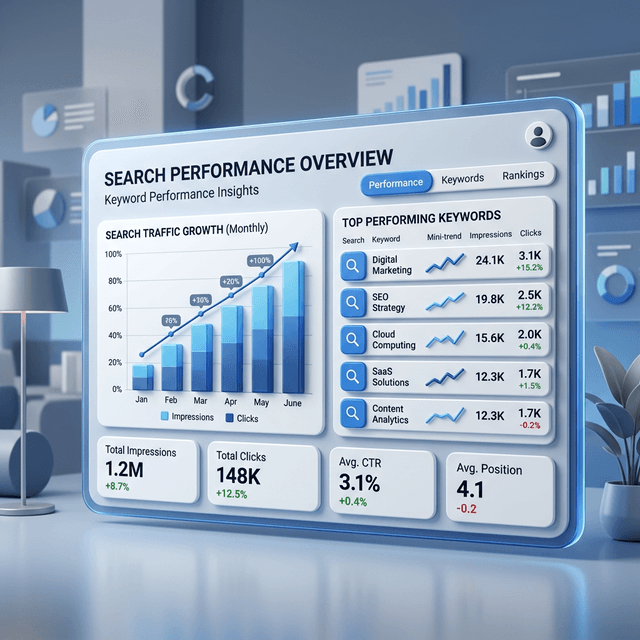
Monitor your Search Console Performance data for the affected pages. Look for CTR changes in the 2-4 weeks following implementation. If FAQ rich results are being displayed, you should see a CTR increase even without position changes.
Check Google's Rich Results report in Search Console to confirm how many of your FAQ implementations are recognized as valid and whether any have errors. Invalid markup produces no benefit and should be fixed immediately.
The long-term measurement is tracking which of your FAQ-enabled pages appear in AI search results. This is harder to measure directly, but you can monitor referral traffic from AI search sources and compare FAQ-enabled pages to non-FAQ pages for patterns.
For how structured data fits into a broader SEO strategy, see The Complete AI SEO Playbook. For more on capturing featured positions, see Featured Snippets: How to Win Position Zero.
Ready to Automate Your SEO?
AgenticSEO generates FAQ schema recommendations based on your content and the questions your audience already asks in search.
Start your free AgenticSEO workflow
Related Articles
- Featured Snippets: How to Win Position Zero (When You're Not the Biggest Site)
- On-Page SEO Checklist: What to Fix Before You Hit Publish
- The Complete AI SEO Playbook
Frequently Asked Questions
What is the best first step to apply this guide?
Start with one high-potential page and one measurable hypothesis, then review results on a fixed weekly cadence.
How do I avoid over-optimizing too quickly?
Change one variable at a time where possible and track outcomes before making another major revision.
Key Takeaways
- Focus on intent alignment before adding volume.
- Prioritize updates using impact and effort, not intuition alone.
- Track outcomes in defined review windows so decisions improve over time.
- Reinforce results with internal links and clear topical structure.